A Visual Journey in Wildlife and Conservation
Government publications rarely inspire. The Gujarat Forest Department needed a wildlife coffee table book that would break that mold entirely, one that felt as alive as the sanctuary it was documenting.
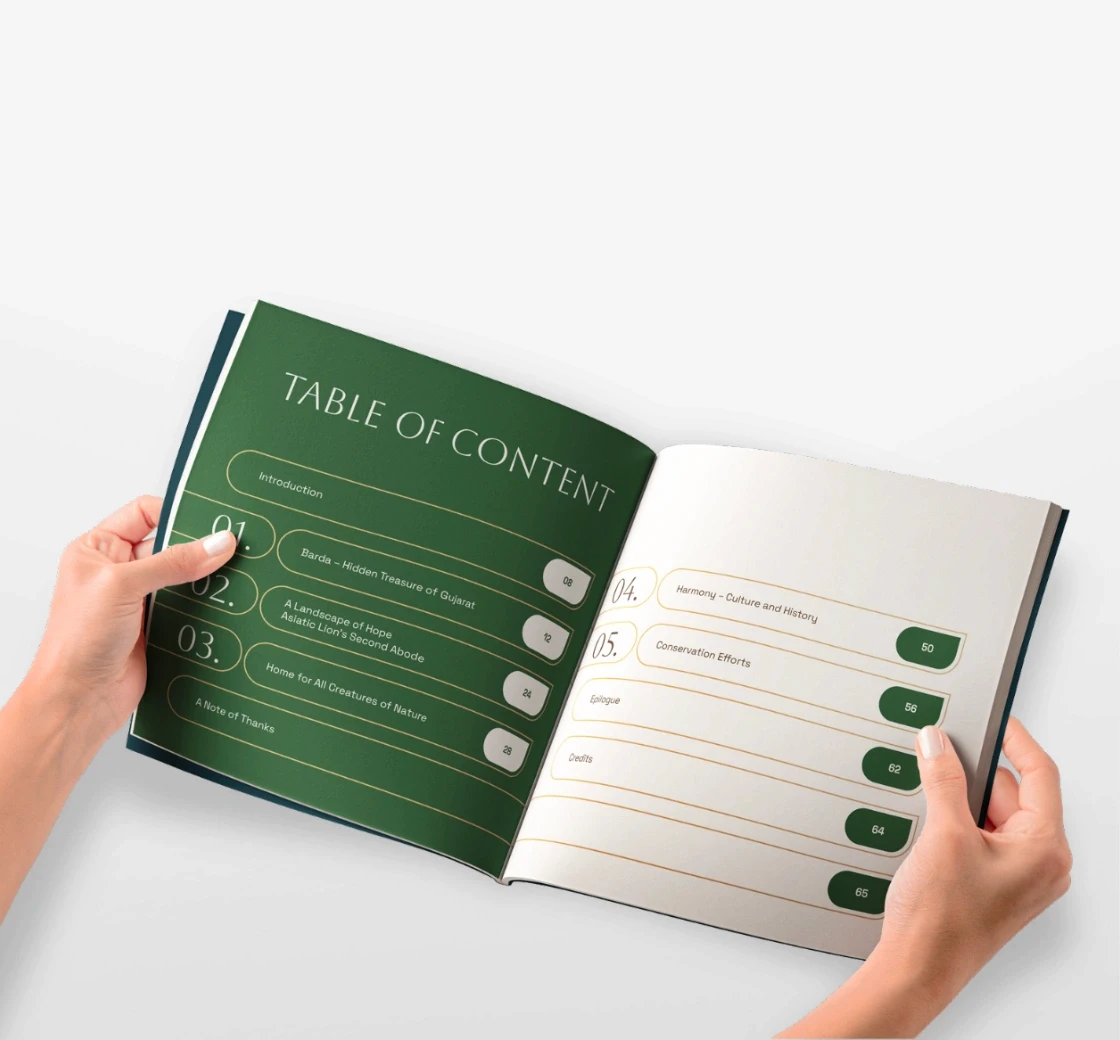
Overview
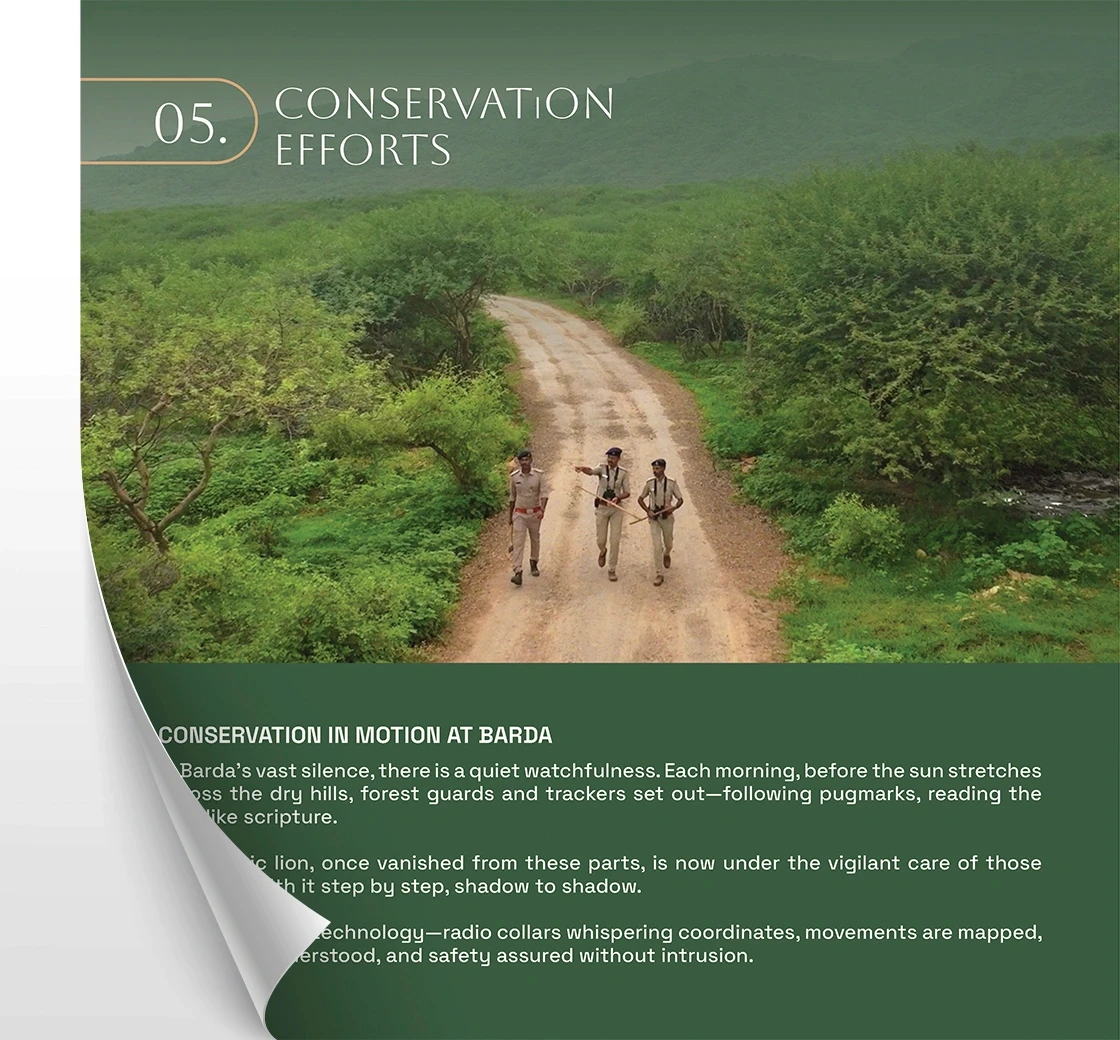
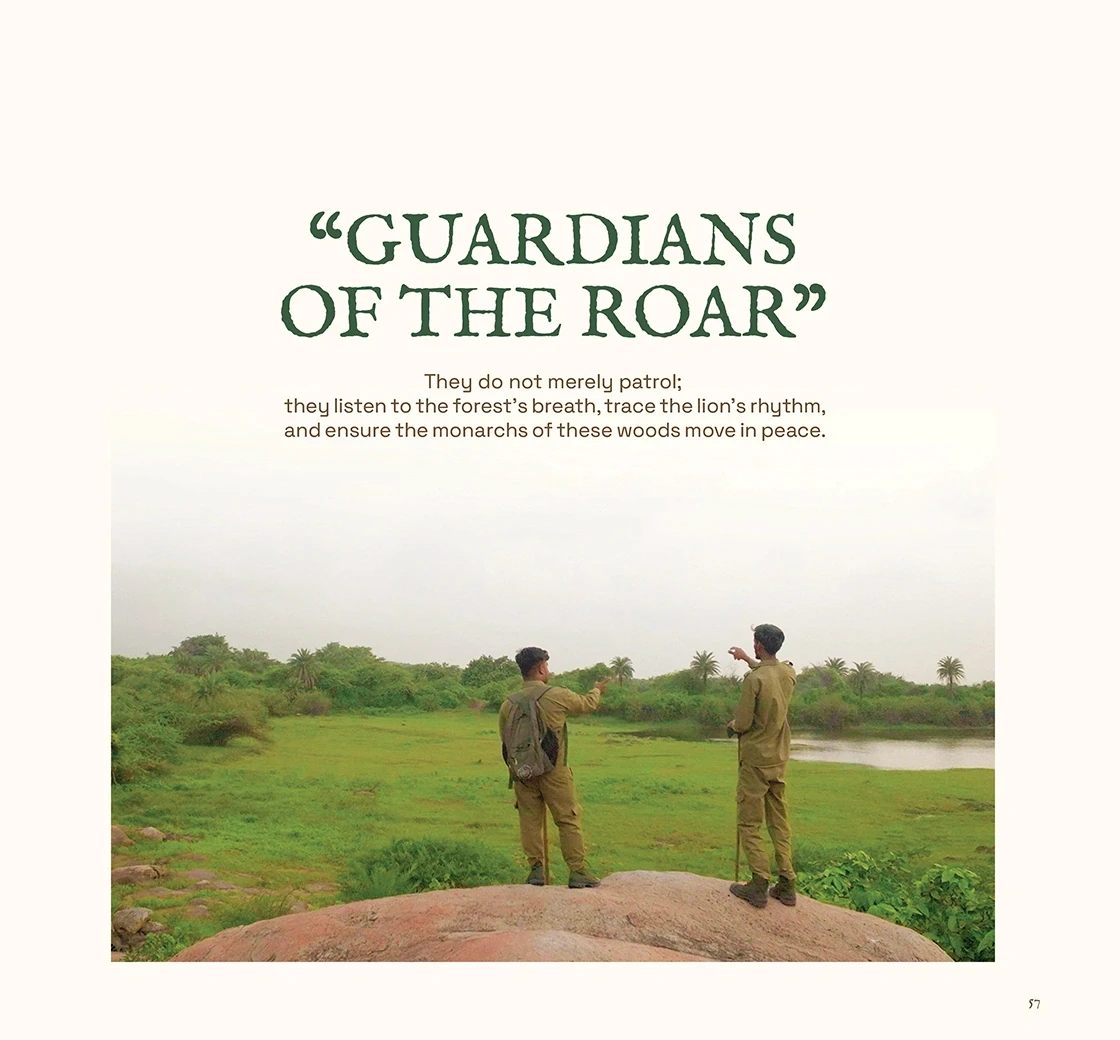
We crafted a wildlife coffee table book unlike anything typically produced for a government client. From the table of contents to the final page, every spread was designed to feel editorial, immersive, and emotionally resonant. We broke away from the standard government publication format with bold, magazine-style layouts and developed a chapter architecture that guides readers from history through ecology to conservation. A forest-green and ivory palette was used throughout to evoke the sanctuary's landscape, while balancing scientific depth with lyrical writing to reach both conservationists and general audiences.
Client
Gujarat Forest Department
Industry
Wildlife & Conservation
Duration
4 Weeks
Year
2024
Closing Thought
This project proved that design can be an act of advocacy. When a publication refuses to look like what it is supposed to be, it earns a second look, and in conservation, a second look can change the conversation entirely.
01
Challenge
The sanctuary's conservation story was largely unknown outside specialist circles. The client needed more than a report, they needed a publication that could command attention, carry emotional weight, and look nothing like a typical government document.
02
Solution
We built a uniquely formatted wildlife coffee table book that moves through Barda's geography, wildlife, cultural history, and conservation efforts. Rich photography, illustrated spreads, poetic chapter openers, and bold typographic layouts gave it the feel of a premium editorial publication, not a bureaucratic one.
03
Result
The publication became a flagship advocacy tool for the sanctuary, shared with policymakers, donors, and wildlife organizations. It repositioned Barda not just as a sanctuary, but as the next chapter in the Asiatic lion's story.
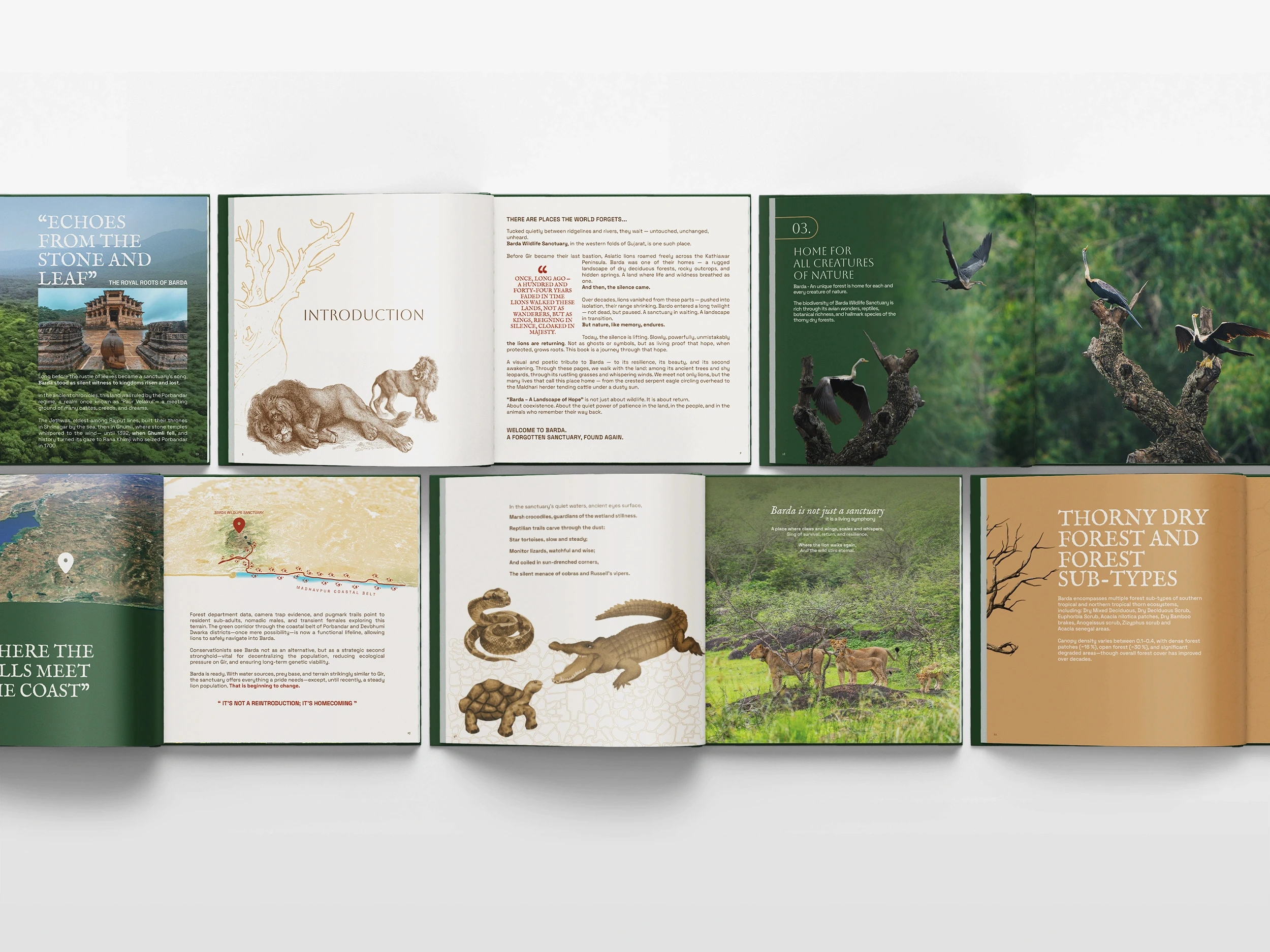
Final Outcome
The book became the primary visual document supporting the lion reintroduction case for Barda, shared with policymakers, conservation donors, and wildlife organizations across Gujarat. It did not just document the sanctuary, it made the case for its future.